ATP test: what is it and how does it work?
An ATP test is the fastest method to check the hygiene of surfaces and liquids. Result in 5 seconds. Used in the food industry, healthcare, pharmaceutical sector and water treatment.
What is an ATP test?
An ATP test (Adenosine Triphosphate test) is a rapid microbiological test that measures the amount of biological material on a surface or in a liquid. ATP is a molecule present in all living and recently dead cells — from bacteria and yeast to food residues and human cells.
The ATP test works via bioluminescence: ATP reacts with luciferin and luciferase (the same reaction as in fireflies) and produces light. A bioluminometer — also called an ATP meter or luminometer — measures the light intensity and displays the result in RLU (Relative Light Units). The more light, the more ATP, the more contamination.
The major advantage of the ATP test over traditional microbiological culture techniques: result in 5 seconds instead of 24–72 hours. This enables immediate action — re-cleaning before production resumes.
How does an ATP test work? Step by step
The test procedure takes less than 30 seconds and requires no laboratory experience.
Sampling with ATP swab
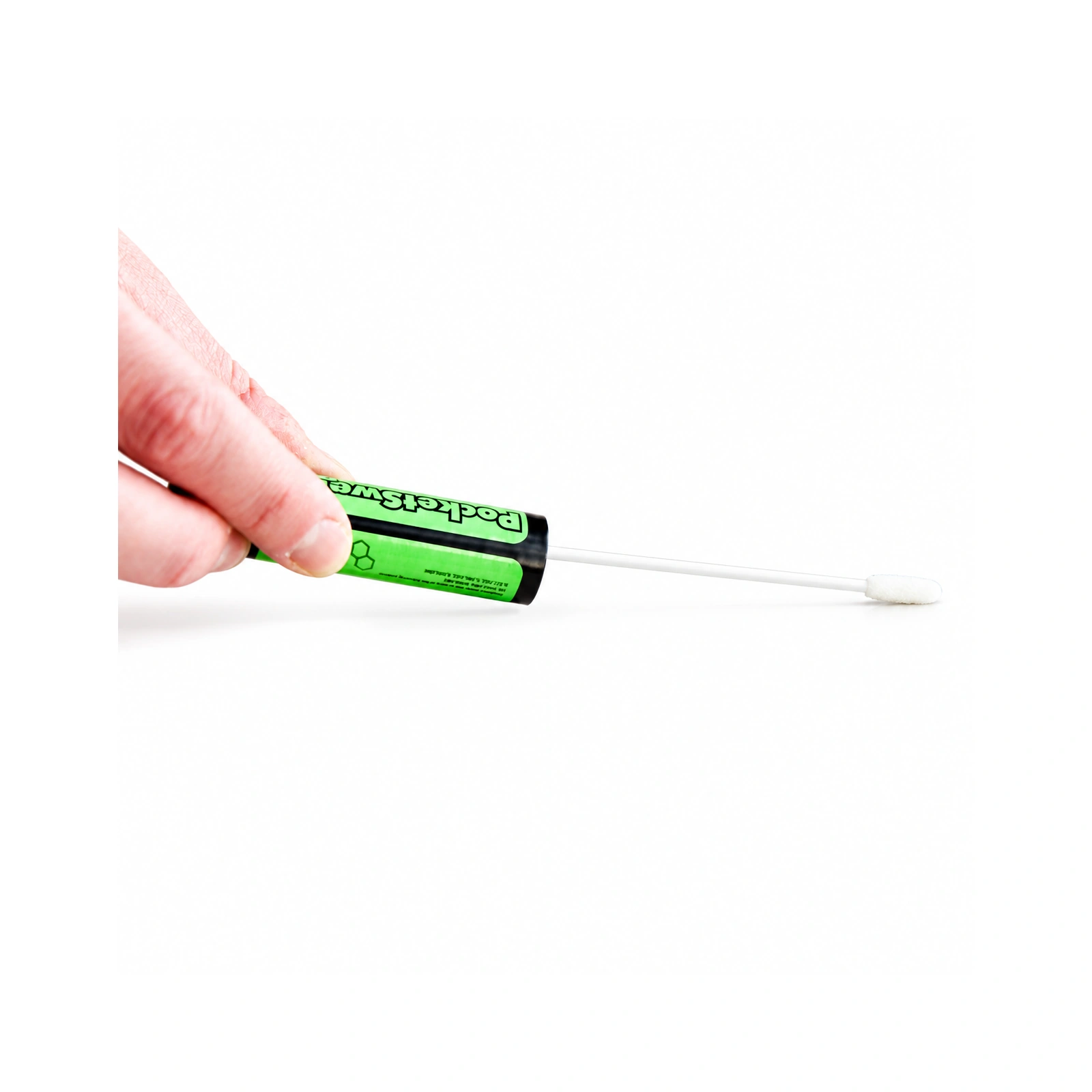
Wipe the ATP swab over the surface to be tested or dip it in the liquid. The swab picks up all biological residues including bacteria, yeast, mould and product residues.
For surface sampling, use the PocketSwab Plus ATP surface swab with the novaLUM II-X.
Activation of the reagents
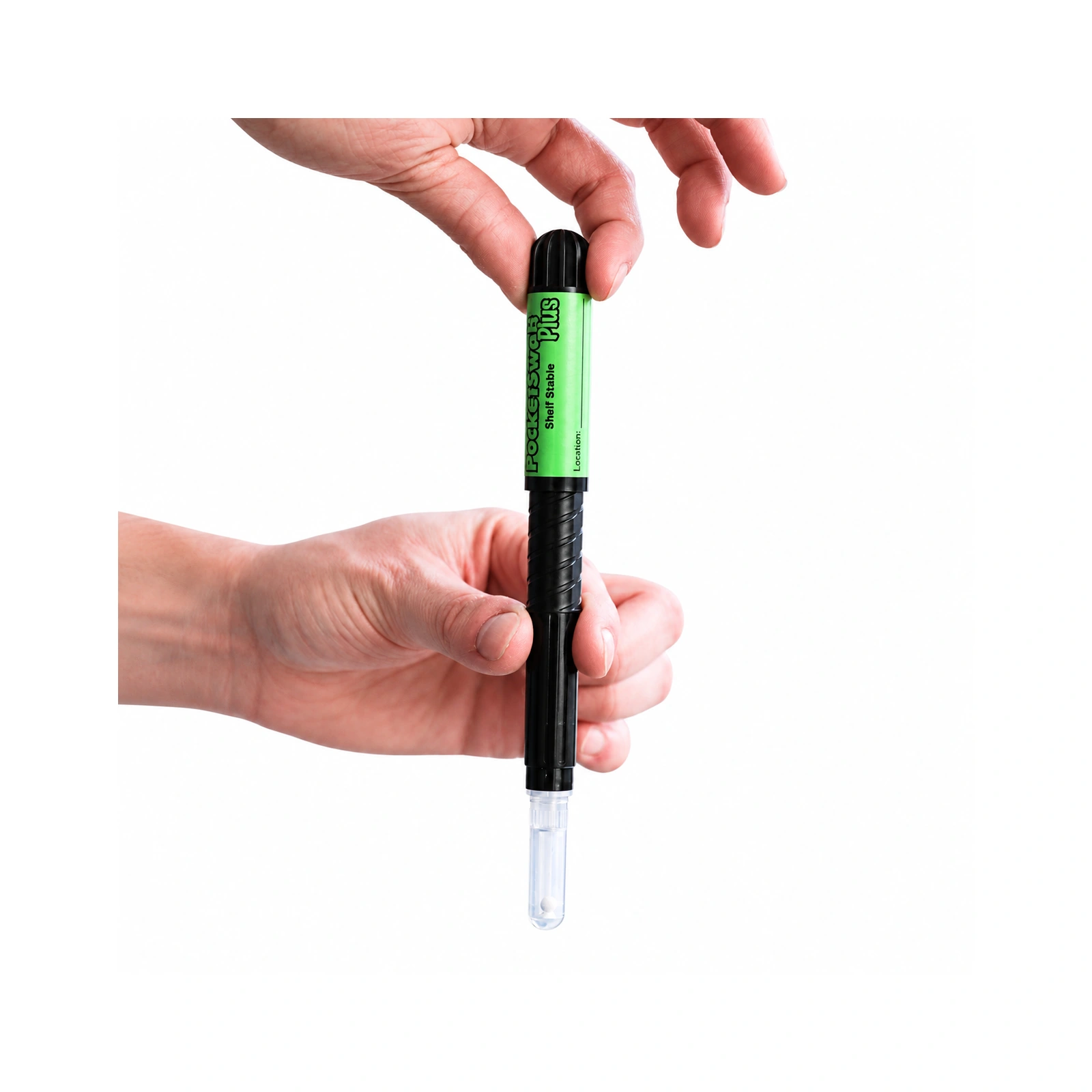
Push the swab back into the PocketSwab Plus and pierce the foil. This activates the dry luciferin/luciferase tablets. The tablets dissolve and react with the ATP on the swab — the bioluminescence reaction starts.
Measurement in the bioluminometer
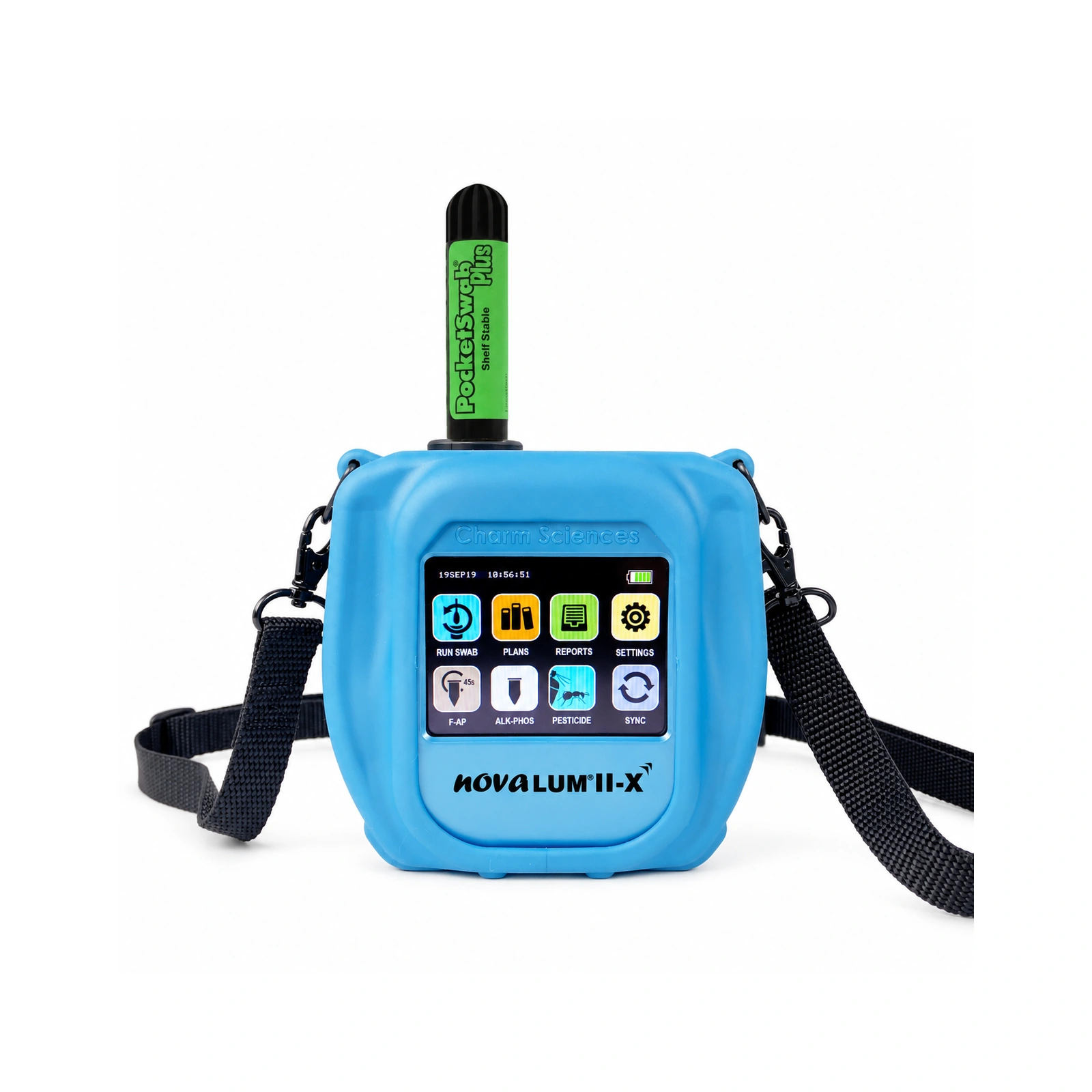
Place the tube in the novaLUM II-X bioluminometer. The PMT sensor (photomultiplier tube) measures the light intensity with laboratory accuracy.
Result in 5 seconds
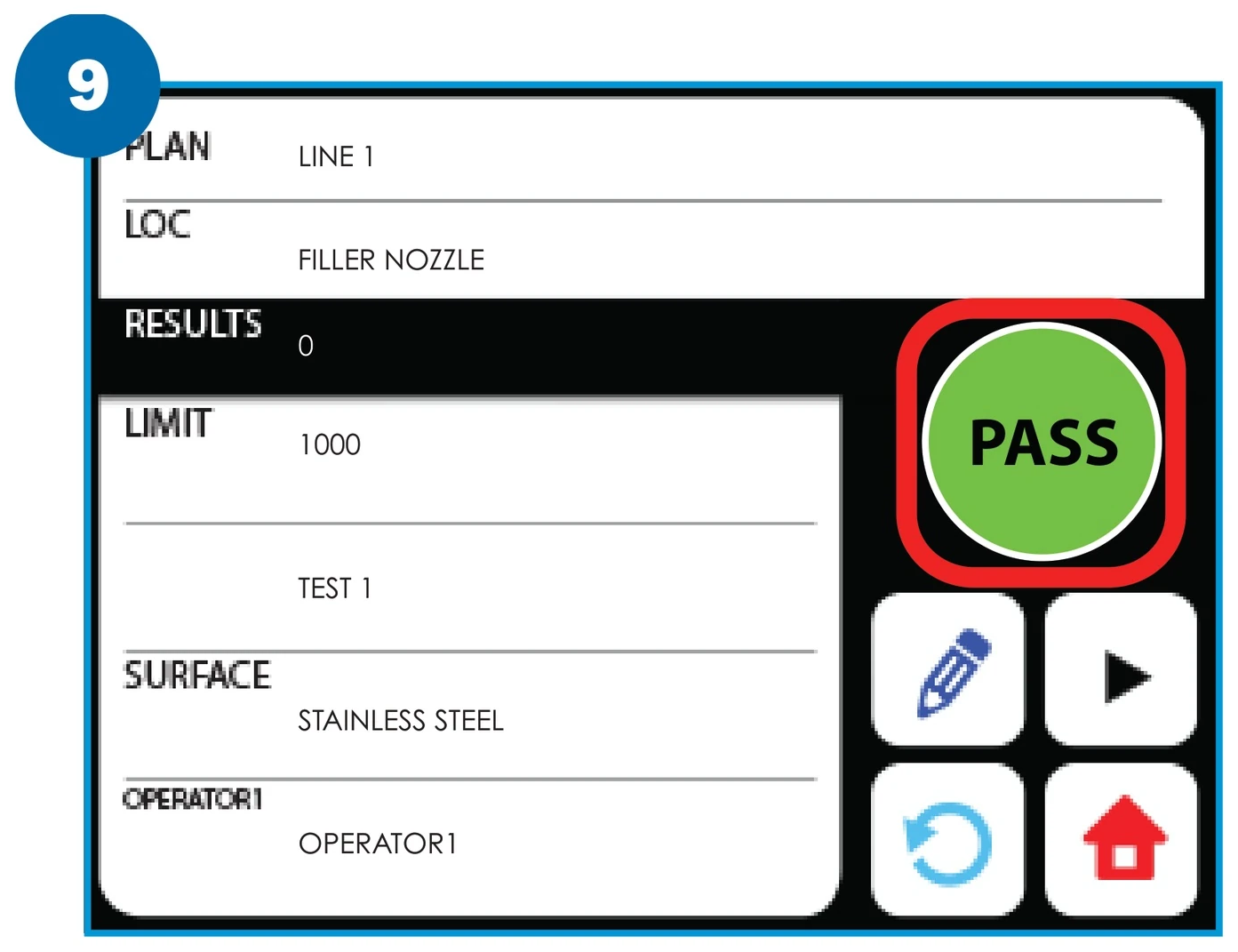
The screen shows the RLU result with automatic PASS/CAUTION/FAIL assessment. Results are saved for HACCP documentation and trend analysis.
ATP test standards: what do the RLU values mean?
A unique advantage of the Charm Sciences system is that it operates without background noise (zero background noise). Every value above 0 RLU represents measurable ATP. This makes the novaLUM II-X exceptionally reliable: you see exactly what is present on the surface, without false signals.
The threshold values (Pass/Fail) depend on the type of surface. The starting values below are based on Charm Sciences TECH-137 (PocketSwab Plus on novaLUM II-X). PASS = RLU ≤ threshold · FAIL = RLU > threshold.
| Surface type | Pass/Fail threshold (RLU) |
|---|---|
| Stainless steel (SS) | 1000 |
| Teflon/PTFE | 4500 |
| Plastic | 2500 |
| Aluminium | 6000 |
| Rubber/silicone | 4500 |
* PASS = RLU ≤ threshold · FAIL = RLU > threshold. Starting values based on Charm Sciences TECH-137. Validate with accompanying microbiological tests (SPC/APC/RODAC) and adjust thresholds based on your own environment.
ATP testing by sector
The ATP test is used in a variety of sectors where hygiene is critical.
Food industry
ATP testing for HACCP cleaning validation, production lines, packaging equipment and contact surfaces. Prevents cross-contamination and complies with BRC/IFS standards.
Hospitals & Healthcare
ATP monitoring of medical equipment, operating rooms and patient rooms. Demonstrable proof of disinfection effectiveness for infection prevention.
Pharmaceutical
Cleaning validation according to FDA/EMA guidelines. ATP testing for GMP compliance on production equipment and cleanrooms.
Process water & Drinking water
ATP test for drinking water and process water with the WaterGiene swab. Detects microbiological contamination in cooling water systems, CIP systems and drinking water installations.
Which ATP meter do you need for the ATP test?
For professional ATP testing you need a reliable bioluminometer. The novaLUM II-X from Charm Sciences is the only luminometer in its class to use a PMT sensor (photomultiplier tube) — the same technology as scientific laboratories.
The PocketSwab Plus from Charm Sciences contains no sodium azide as a preservative. Sodium azide is a toxic and environmentally hazardous substance found in many competing ATP swabs. Charm Sciences reagents are GRAS (Generally Recognized As Safe) and leave no hazardous residues on treated surfaces — safe for use in the food industry, healthcare and pharmaceutical sector. Check the MSDS document of your current swab if you are unsure about its composition.
Frequently asked questions about the ATP test
What is the difference between an ATP test and a microbiological culture?
An ATP test gives results in 5 seconds and measures all biological residues (living and dead). A microbiological culture takes 24–72 hours but only counts living bacteria. ATP tests are used for immediate cleaning validation; cultures for detailed microbiological analysis.
How often should I perform an ATP test?
The test frequency depends on your HACCP plan and sector. In the food industry, testing is typically done after each cleaning on critical contact surfaces. In healthcare after each disinfection of high-risk surfaces. Your MCS advisor will help you set up a test schedule.
Can I also use the ATP test for water samples?
Yes, with the WaterGiene swab you can perform ATP tests on drinking water, process water, cooling water and CIP rinse water. The WaterGiene swab is specially developed for water samples and works with the novaLUM II-X luminometer.
What does an ATP test cost?
The cost per ATP test consists of the purchase price of the luminometer (one-time) and the cost per swab. PocketSwab Plus swabs cost approximately €1.50–€2.50 per unit depending on the quantity ordered. Use our cost calculator for an accurate calculation for your situation.
Ready to start ATP testing?
Request a free demonstration. Our specialist will visit you with the novaLUM II-X and show you how the ATP test works in your specific situation.